Social Studies Teaching Certification

Certified social studies teachers pass a state exam covering U.S. history, world history, geography, civics, and economics. Many states use the Praxis Social Studies exam, though exam names and rules vary by state. Most require a bachelor’s degree and an approved prep program, and some offer alternative certification on state-specific terms. Each Board of Education sets its own eligibility rules.
Sponsored School(s)


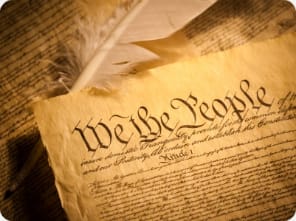
Social studies certification tests future teachers on five content areas at once: U.S. history, world history, geography, government and civics, and economics. That breadth is what sets it apart from single-subject licenses like math or English, and it’s why the certification exams run longer and cover more ground.
Certification requirements, exams, and endorsement structures vary by state rather than following one national process. Many states require passing the Praxis Social Studies exam (test code 5581, which replaced the retired 5081) alongside a bachelor’s degree and an approved teacher preparation program, but other states use their own state-specific content test instead. Social studies teachers use this content knowledge to help students become informed, civic-minded adults who can evaluate evidence, place ideas in historical context, and engage with cultures and perspectives beyond their own.
Use the links below to jump to certification requirements, what the exams cover, and how teachers use film in the classroom.
- How to get social studies teaching certification
- What social studies certification exams cover
- Using film to teach history
How to Get Social Studies Teaching Certification
Certification requirements, exams, and endorsement structures differ by state, so there’s no single national process. Most traditional paths follow a similar sequence: earn a bachelor’s degree, complete a state-approved teacher preparation program with supervised student teaching, and pass the state’s required certification exams. Many states use the Praxis Social Studies exam for this, while others rely on their own state-specific content test. Check the state certification requirements page for your state’s exact exam name, endorsement rules, and passing score.
Career changers who already hold a bachelor’s degree don’t have to start over. Alternative certification is available in many states and typically lets candidates begin teaching social studies under a provisional license while completing required coursework and exams, but the timeline, eligibility rules, and available routes are set individually by each state, so check your state’s requirements before assuming a specific path applies.
| Path | Education Required | Licensing Exam |
|---|---|---|
| Traditional Certification | Bachelor’s in education or social studies with student teaching | Praxis Social Studies exam or state-specific equivalent (varies by state) |
| Alternative Certification | Bachelor’s degree (any field) + state-approved program | Same state exam, often taken while teaching on a provisional license |
Whichever path a candidate takes, the state Board of Education reviews the application and makes the final call on eligibility, including any background check or coursework gaps that need to be resolved before a license is issued.
What Social Studies Certification Exams Cover
Social studies certification exams draw from five content areas: world history, U.S. history, geography, government and civics, and economics. Here’s what each one tests.
World History
World history questions test how human societies connected and clashed across time. Candidates need to know classical civilizations like Greece, Rome, Persia, and China, and how their governing ideas fed into modern systems like democracy.
Exams also cover the Renaissance and the Enlightenment, and how those movements reshaped economies and social structures, from the spread of market economies to the rise of world religions. Teachers need a working knowledge of major religious philosophies, since religion has shaped so much of world history. War and conflict get their own weight too: candidates must know the major political and economic consequences of World War I and World War II.
U.S. History
U.S. history questions focus on how the country’s founding shaped its culture and institutions. Candidates need to understand the European colonists’ philosophical influences on North America, including why religious freedom drove early colonization and why it still matters in U.S. life today.
Exams test knowledge of the American Revolution’s origins and lasting effect on U.S. diplomacy, along with the Constitution and Bill of Rights and how those documents protect individual rights. Territorial expansion and its consequences for Native American tribes come up too, along with the country’s role in World War I and World War II and its emergence as a world power. More recent material spans the Cold War through the post-9/11 conflicts in Iraq and Afghanistan and their lasting effect on U.S. foreign policy.
Geography
Geography questions test how people relate to their environments and to each other. Candidates should understand how a country’s renewable and nonrenewable resources affect its growth or decline, and how to read data like population density, literacy rates, and mortality rates against other countries.
Certification also expects familiarity with Geographic Information System (GIS) software, which teachers can use to map patterns like air pollution or population density in a metro area. Political geography, including borders, state formation, and areas of ongoing conflict, rounds out this section.
Government and Civics
This section tests knowledge of political theories and systems, from liberalism and conservatism to theocracies and democracies. Candidates need to explain the relationship between citizens and their government, including founding documents, public policy, and how citizens participate in civic life.
Exams also cover U.S. political parties past and present, the election and voting process, and how the Constitution protects citizen rights. Candidates should know key Supreme Court precedents and how the legal system, including the courts, affects people living in the U.S. and abroad.
Economics
Economics questions test how decision-makers allocate and distribute resources, and the intended and unintended costs of those choices. Candidates need working knowledge of markets, prices, competition, and how governments shape fiscal policy through market fluctuations.
Certification covers microeconomics topics like scarcity, factors of production, taxes, and supply and demand, along with macroeconomics topics like unemployment, inflation, and exchange rates. Exams also test knowledge of major economic schools of thought, including Keynesian, classical, monetarist, and supply-side economics.
Using Film to Teach History
Textbooks alone can make history feel distant. That’s why many social studies teachers add film to their history lessons, giving students a more visceral way to engage with difficult material.
Research on this practice appears in The History Teacher, in a 2007 article titled “Tinsel Town as Teacher: Hollywood Film in the High School Classroom” by Alan S. Marcus and Jeremy D. Stoddard. The authors found that most textbook writing stays deliberately neutral, which can strip the emotional weight from subjects like slavery, war, and human tragedy. Follow-up research citing their work found that 82% of secondary social studies teachers reported using documentaries at least once a week in the classroom.
Marcus and Stoddard point to specific classroom results. Students who watched Amistad, a film about African slaves, spent more time discussing and empathizing with the realities of slavery than students who only read a textbook passage on the same topic. Film helps students recognize how people in the past experienced events, not just what happened.
That said, film isn’t a stand-in for accuracy. Movies can dramatize or simplify history in ways that don’t hold up, since studios answer to box offices, not history departments. Teachers who pair film with other primary sources tend to see the best results: more engaged students without sacrificing historical accuracy.
Sponsored School(s)
Frequently Asked Questions
What degree do I need for social studies certification?
Most states require a bachelor’s degree, either in social studies, history, or a related field, or in education with a social studies concentration. The degree must come from an accredited institution and include the coursework your state’s teacher preparation program requires.
What exam do I need to pass for social studies certification?
It depends on your state. Many states use the Praxis Social Studies exam (test code 5581), which covers U.S. history, world history, geography, government and civics, and economics, while other states require their own state-specific content exam. Check your state’s certification requirements page for the exact test name and passing score.
Can I become a social studies teacher through alternative certification?
In many states, yes. If you already hold a bachelor’s degree, alternative certification typically lets you begin teaching social studies under a provisional license while you complete required coursework and pass your state’s certification exam. Eligibility, timelines, and available routes are set by each state, so confirm the specifics with your state’s Board of Education.
Do social studies teachers need to know all five content areas equally well?
Certification exams test all five areas: world history, U.S. history, geography, government and civics, and economics. States don’t let candidates skip a section, since a licensed social studies teacher may end up teaching any of these topics depending on their school’s curriculum.
Does social studies certification transfer if I move to a new state?
Not automatically. Certification requirements and reciprocity agreements vary by state, so a license earned in one state may require additional coursework or a different exam before a new state will recognize it. Check with the new state’s Board of Education before assuming your license transfers as-is.
- Certification covers five content areas — world history, U.S. history, geography, government and civics, and economics all appear on the exam, not just one specialty.
- Exams and eligibility rules vary by state — many states use the Praxis Social Studies exam, but others require their own state-specific test, so confirm the exact exam with your state’s licensing board.
- Alternative certification is available in many states — career changers with a bachelor’s degree can often start teaching on a provisional license while finishing requirements, though eligibility rules are state-specific.
- The state Board of Education has final say — the board reviews every application and can flag coursework gaps or background-check issues before issuing a license.
- Reciprocity isn’t automatic — moving states usually means checking whether your current certification meets the new state’s requirements.
Find accredited educator preparation programs that cover social studies content areas and prepare you for your state’s certification exam.