Science Teaching Certification
Science teacher certification requires a bachelor’s degree, a teacher preparation program with supervised student teaching, and passing a Praxis Subject Assessment or another state-approved content exam in your science area. Many states offer alternative certification for candidates who already hold a bachelor’s degree, often in a science field or with sufficient science coursework, letting them start teaching sooner while finishing licensure requirements. The state’s educator certification agency reviews your application and issues the appropriate license or subject-area endorsement, such as biology, chemistry, physics, or earth and space science.
Sponsored School(s)


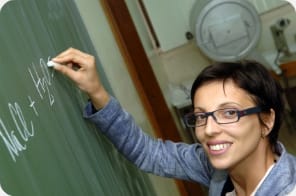
Every state requires certified science teachers to hold a bachelor’s degree, pass content-specific exams, and complete supervised classroom experience before they can lead their own science classroom. The details vary by state and by the age group you want to teach, but the path follows the same basic shape everywhere: earn the degree, prove you know the content, prove you can teach it, then apply for your license. If you already know which science subject you want to focus on, you can also explore certification in a specific science subject like life science, or find schools offering teaching certification programs in your area.
Use the links below to jump to certification requirements, exam content, and lab standards.
- How to become a certified science teacher
- What science certification exams cover
- Life science content standards
- Earth and space science content standards
- Physics and chemistry content standards
- Why lab experience matters for certification
How to Become a Certified Science Teacher
Most states follow a similar sequence for traditional certification. You’ll need a bachelor’s degree, either in a science discipline like biology or chemistry or in science education, and you’ll complete a state-approved teacher preparation program alongside it. That program includes supervised student teaching, usually a full semester in a real science classroom under a mentor teacher.
From there, you’ll sit for your state’s required certification exams. Many states require a Praxis Subject Assessment or another state-approved content exam in Biology, Chemistry, Physics, Earth and Space Science, General Science, or a comparable subject-area assessment, along with a general pedagogy exam covering teaching methods and classroom management. Several states use their own state-developed exams instead, such as FTCE, TExES, NES, GACE, or MTTC.
Many states offer alternative certification for candidates who already hold a bachelor’s degree, often in a science field or with sufficient science coursework, even without a formal teacher preparation program. These programs let you start teaching under a provisional license while you complete required coursework, mentoring, and exams. The traditional path typically takes about four to five years. In comparison, many alternative certification programs can be completed in about one to two years, though this varies by state and program.
Requirements also shift with grade level, and grade bands vary by state. In many states, elementary teachers earn a broad elementary teaching license, while middle and high school teachers earn subject-specific science endorsements or licenses. Some states use different bands entirely, such as K-8 science endorsements or 5-9 middle grades science. Check your state’s certification requirements for the exact exams, fees, grade bands, and application steps that apply where you plan to teach.
What Science Certification Exams Cover
Science teacher certification exams test two things: your command of the subject matter and your ability to teach it. Before you’re certified, you’ll need to show you can organize a science curriculum, guide students through difficult concepts, and design lab activities that hold up in a real classroom, not just on paper.
These unifying concepts show up across every science subject area, which is why most state exams test them as a foundation before drilling into biology, earth science, or physics specifically. Explore certification information in your state to see which exam version applies to you.
Life Science Content Standards
Life science makes up a major share of most general science and biology certification exams. To pass, you’ll need to show you understand cell structure and function, genetics, evolution, and how plants and animals are classified. You’ll also need to explain how cell structures support the broader cycle of life, and what happens when those structures fail.
Exams also test your knowledge of how organisms behave and interact, from the smallest bacteria to the largest mammal, including how introducing a new species can disrupt or stabilize an existing ecosystem. On the botany side, you’ll need to know how plants take in sunlight, convert it to energy, and pass that energy along to the organisms that consume them.
This content knowledge is what lets certified science teachers build lab experiments that connect directly to what students are learning, like a dissection lab tied to a unit on animal anatomy, rather than a generic activity with no link to the curriculum.
Earth and Space Science Content Standards
Earth and space science certification covers the physical geology of Earth, including its minerals, rock formations, and fault lines, along with how those features shaped mountains, oceans, canyons, and volcanoes over time. You’ll also need a working understanding of the origin of the universe and how stars, planets, and other major features fit together.
Meteorology is part of this content area too. Certified earth science teachers can explain how waves, tides, and currents affect weather patterns, and how properties of the atmosphere, precipitation, and climate interact, so they can walk students through basic weather prediction rather than just reciting facts about it.
Physics and Chemistry Content Standards
Physics and chemistry are typically the most math-heavy sections of a science certification exam. On the physics side, you’ll need to understand the basic properties of matter and how forces like gravity affect it, along with the laws of motion covering speed, displacement, and inertia. You’ll also need to explain how mechanical devices, like screws, levers, and pulleys, combine into more complex machines students recognize from everyday life.
Chemistry content covers the periodic table and how elements combine, including atomic number, chemical reactivity, and physical properties; how chemical bonds form; and how factors like temperature and concentration affect that bonding. Because chemistry teaching happens largely in a lab setting, certification also confirms you know the safety protocols for handling chemicals and responding if something spills or a student comes into contact with a hazardous substance.
Why Lab Experience Matters for Certification
Lab work is where science certification connects to what actually happens in a classroom. Giving students hands-on lab time is one of the clearest ways to show them how scientific knowledge plays out in the real world, the same way working scientists spend their time testing hypotheses and checking results rather than reading about them.
Education researcher Susan R. Singer and her co-authors describe good lab experience as connecting directly to how scientific understanding actually develops over time, built on evidence rather than fixed conclusions. That framing shapes what certification exams look for: teachers who can turn lab time into more than a checklist of steps.
Lab experience is built around a few core goals. It deepens students’ grasp of the subject matter by giving them a closer, more concrete look at concepts they’ve only read about. It builds scientific reasoning, teaching students to form questions, construct arguments, and respond to challenges to their conclusions. And it teaches the practical tools of science, like observation, measurement, and following the scientific method, skills that carry over well beyond a single lab report.
Certification exams test whether you can turn these goals into an actual lesson plan, not just recite them. A science teacher who understands why lab work matters designs experiments that build toward something, rather than filling class time.
Frequently Asked Questions
Do I need a science degree to become a certified science teacher?
No, though it helps. Many science teachers hold a degree in Education with a science concentration rather than a degree in biology, chemistry, or another science field. What matters for certification is passing your state’s subject-area exam and completing an approved teacher preparation program, regardless of which degree path got you there.
What exam do I need to pass for science teacher certification?
Many states require a Praxis Subject Assessment or another state-approved content exam in Biology, Chemistry, Physics, Earth and Space Science, General Science, or a comparable subject-area assessment, along with a general teaching methods exam. Several states use their own state-developed exams instead. Check your state’s certification page for the exact test names required.
Can I become a certified science teacher through an alternative program?
Yes, in many states. Alternative certification is generally available to candidates who already hold a bachelor’s degree, often in a science field or with sufficient science coursework, even without a traditional teacher preparation program. You start teaching under a provisional license while completing coursework, mentoring, and exams. Timelines and eligibility rules vary by state.
Is science teacher certification the same at every grade level?
Not exactly. In many states, elementary teachers earn a broad elementary teaching license. In contrast, middle and high school teachers earn subject-specific science endorsements or licenses tied to a course like Biology or Physics. Exact grade bands and endorsement structures vary by state.
How long does it take to become a certified science teacher?
The traditional path, bachelor’s degree plus teacher preparation program, typically takes about four to five years. Many alternative certification programs can be completed in about one to two years for candidates who already hold a bachelor’s degree, since they start teaching while finishing licensure requirements. Exact timelines vary by state and program.
- A bachelor’s degree and teacher prep program form the traditional path — most states require a degree plus a preparation program with supervised student teaching before you can apply for certification.
- Many states require a Praxis Subject Assessment or comparable exam — some use their own state-developed content exam instead, matched to your specific science area, such as Biology, Chemistry, or Earth and Space Science.
- Alternative certification exists for career changers in many states — candidates who already hold a bachelor’s degree, often in a science field or with sufficient science coursework, can start teaching sooner under a provisional license while finishing requirements.
- Content areas map to state exam sections — life science, earth and space science, and physics and chemistry each show up as distinct sections on most state certification exams.
- The state’s educator certification agency sets final eligibility — it reviews applications, issues licenses and subject-area endorsements, and can deny certification over incomplete coursework or background-check issues.
Find accredited science teacher certification programs, including bachelor’s, alternative, and master’s degree pathways aligned with your state’s Praxis or state-approved exam and licensing requirements.