Illinois Teaching Salaries and Benefits

Illinois teacher salaries rank among the highest in the country, with elementary and middle school teachers earning a median annual salary above $75,000 according to May 2025 BLS data. Benefits center on the Teachers’ Retirement System (TRS) pension rather than Social Security, since Illinois is one of about 15 states where teachers don’t pay into or draw from Social Security through their teaching job. Health coverage runs through the state’s Central Management Services plans.
Sponsored School(s)


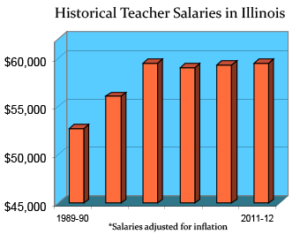
Illinois teacher salaries pay well by national standards. According to the Bureau of Labor Statistics, elementary school teachers in Illinois earned a median annual salary of $75,320 as of May 2025, well above the national median of $63,970 for the same role. That pay comes bundled with a retirement and health benefits structure that works differently than most private-sector jobs, and differently from teaching jobs in states where Social Security applies. Here’s what Illinois teachers actually get, and what to watch for in the pension system.
Illinois Teacher Salaries by Grade Level
The Illinois State Board of Education tracks salaries separately, but BLS wage data gives the clearest state-to-state comparison. Pay generally rises with grade level and holds up across experience bands as teachers move up the salary schedule.
| Occupation | Median Annual Wage | Mean Annual Wage |
|---|---|---|
| Kindergarten Teachers | $64,020 | $71,160 |
| Elementary School Teachers | $75,320 | $74,630 |
| Middle School Teachers | $76,110 | $75,870 |
| Secondary (High) School Teachers | $79,990 | $89,320 |
Illinois also sets a statewide wage floor. State law phased in a minimum teacher salary that reached $40,000 for the 2023-24 school year, with future minimums tied to the consumer price index. That floor matters most in downstate and rural districts, where starting pay has historically lagged well behind Chicago-area suburbs.
Retiring in Illinois: The Teachers’ Retirement System
Most Illinois public school teachers, outside of Chicago, are covered by the Teachers’ Retirement System (TRS). Chicago teachers have a separate pension fund, the Chicago Teachers’ Pension Fund (CTPF), that works on similar principles. Both are defined-benefit plans: your eventual pension is calculated from years of service and final average salary, not from an account balance you build up yourself.
Teachers contribute a percentage of their salary toward the pension each year, split between the retirement annuity, cost-of-living adjustments, and survivor benefits. Exact contribution and benefit formulas have changed across TRS tiers over the years, so check your specific tier and hire date directly with TRS rather than relying on a single published rate.
Vesting generally requires 10 years of service credit. Full retirement age and benefit percentages also vary by tier, with teachers hired more recently facing later retirement ages and different accrual rates than those hired before 2011. TRS publishes current tier rules and a benefit estimator that reflects your specific hire date.
Illinois Teachers and Social Security
Illinois is one of roughly 15 states where public school teachers don’t participate in Social Security through their teaching job. No Social Security tax is withheld from TRS-covered teaching pay, and time spent in the classroom doesn’t build Social Security credits. TRS is the primary retirement benefit for most career Illinois teachers, not Social Security.
This matters most for teachers who also worked, or plan to work, in jobs where Social Security tax was withheld. For decades, two federal rules, the Windfall Elimination Provision (WEP) and the Government Pension Offset (GPO), reduced or eliminated Social Security benefits for people who also collected a pension from non-covered work like Illinois teaching. The Social Security Fairness Act repealed both provisions, effective for benefits payable from January 2024 onward. Teachers who had Social Security benefits reduced or wiped out by WEP or GPO in the past may now be eligible for higher payments. Because eligibility depends on your specific work history and tier, check your Social Security statement directly with the Social Security Administration to see how the repeal affects your benefit.
Health Insurance Coverage for Illinois Teachers
Some Illinois public school employees receive coverage through plans administered by the Illinois Department of Central Management Services (CMS), while many districts provide health benefits through locally negotiated plans instead. Where CMS-administered coverage applies, options generally fall into a few structures:
- Quality Care Health Plan (QCHP): The broadest network option. You can see any physician or hospital, though in-network care comes with lower costs and enhanced benefits.
- Health Maintenance Organization (HMO) plans: Require choosing a primary care physician from a defined network, who coordinates referrals and specialist care.
- Open Access Plan: Combines HMO-style cost savings with the flexibility of in-network and out-of-network tiers.
Across plan types, teachers typically have access to physician visits, inpatient and outpatient care, mental health services, emergency care, and hospice care, with dental and vision coverage included at no added cost. Specific plan availability and premiums vary by district and bargaining agreement, so confirm current options directly with your district’s benefits office or the Illinois Department of Central Management Services.
Frequently Asked Questions
Do Illinois teachers pay into Social Security?
No. Illinois teachers covered by TRS or CTPF don’t have Social Security tax withheld from their teaching pay and don’t earn Social Security credits from that work. Their primary retirement benefit comes from the pension system instead.
What is the average teacher salary in Illinois?
According to the Bureau of Labor Statistics, the median annual wage for elementary school teachers in Illinois was $75,320 as of May 2025, with middle school and high school teachers earning somewhat more. Actual pay varies by district, experience, and education level.
At what age can Illinois teachers retire?
Retirement age and benefit formulas depend on which TRS tier you’re in, which is based on your hire date. Teachers hired before 2011 generally qualify for full benefits earlier than those hired after, who face a later full retirement age under Tier 2 rules. Check your specific tier with TRS directly.
Does the Social Security Fairness Act affect Illinois teachers?
Yes. The Act repealed the Windfall Elimination Provision and Government Pension Offset, effective for benefits payable from January 2024 onward. Illinois teachers who had Social Security benefits reduced because of a TRS pension may now qualify for a higher benefit.
What health insurance do Illinois teachers get?
Coverage is administered through the Illinois Department of Central Management Services and generally includes a choice between the Quality Care Health Plan, an HMO plan, or an Open Access Plan, each with different network flexibility and cost structures.
- Illinois pays above the national median. Elementary and middle school teachers earn median salaries above $75,000, well ahead of national BLS figures for the same roles.
- TRS replaces Social Security, not supplements it. Most Illinois teachers don’t pay into or draw from Social Security through teaching, making the TRS pension their main retirement benefit.
- The WEP/GPO repeal matters for career-changers. Teachers with Social Security-covered work history may now qualify for benefits that were previously reduced or eliminated.
- Health coverage runs through CMS. Plan options and costs vary by district and bargaining agreement, so confirm current choices locally.
Find Illinois teacher licensure programs and learn about Professional Educator License requirements in Illinois, endorsements, application steps, and timelines from the Illinois State Board of Education. Requirements vary by endorsement and educator preparation pathway.

May 2025 US Bureau of Labor Statistics OEWS wage estimates and 2024-2034 employment projections for Kindergarten and Elementary School Teachers, Middle School Teachers, and High School Teachers, reflect state and national data, not school-specific outcomes. State or district job-growth projections are sourced separately from national BLS outlook data. Conditions vary by school sector, subject area, and district. Data accessed July 2026.